
R&D Tax Incentive for AI and Machine Learning Projects
Australian businesses are increasingly embracing artificial intelligence, from developing custom machine learning models to integrating large language models into business software. As AI projects gain popularity, an important question arises: can you claim the costs of developing AI technology under Australia’s R&D Tax Incentive?
Potentially, yes, but it depends on how you’re using it. There’s a significant difference between simply using generative AI and undertaking eligible R&D experimentation involving AI. Understanding that difference is critical to the strength of your claim.

Rimon Advisory has the deepest knowledge of AI as an R&D tax incentive specialist and helps teams identify what qualifies, capture every eligible dollar, and build claims that hold up under scrutiny.

AI or Machine Learning R&D Eligibility
One of the most common mistakes businesses make when thinking about R&D is that simply creating something innovative makes it automatically eligible. Unfortunately, that is not true.
R&D eligibility requires you to undertake systematic experimentation to resolve a technical uncertainty that couldn’t be answered using existing knowledge. Your project may be potentially eligible if you have a clear question that you cannot solve with available information and you have a detailed experimental pathway.
For AI and ML projects, that means being able to clearly answer:
- Was there genuine technical uncertainty in what you were trying to achieve?
- Could the outcome have been determined in advance using existing publicly available knowledge?
- Did your team undertake systematic experiments to resolve that uncertainty?
Where R&D Begins and Ends in an ML Project
Another challenging aspect of AI and ML eligibility is that many projects can involve a mixture of routine software development, API integration, data preparation, model configuration, experimental algorithm development, testing, and deployment.
Some of these activities may qualify as Core or Supporting R&D, but others will not. Separating what is eligible from what is not, is essential when building a strong R&D claim.
Project Stage | Potentially Eligible? |
|---|---|
Problem framing and hypothesis formation | Yes |
Baseline model development | Yes |
Data collection, preparation, and novel labelling | Where technically uncertain |
Candidate experiments, evaluation, and model selection | Yes |
Deployment and integration | Where technically uncertain |
Production monitoring and maintenance | No |
Not sure if your project qualifies?
If you’re unsure about eligibility or how to apply, we recommend speaking with a skilled R&D tax consultant, specialising in AI and LM who can guide you through the process. AI is still relatively new and not all projects are eligible for R&D. Don’t risk incorrect claims or leaving money on the table; talk with an expert today.
Five Types of AI Projects
Not all AI projects are equal or eligible. To determine whether your project is eligible for R&D, it can be helpful to break it down into five main categories.

Developing a completely new AI model architecture
Researching and testing a new model architecture or learning approach.
Training your own LLM
Training an existing architecture or your own data.
Fine-tuning an existing LLM
Further training an existing model using specialised data.
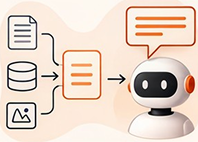
Building a RAG system
Connecting an LLM to external data sources to improve responses.

Prompt engineering
Experimenting with prompts to get better outputs or build more advanced AI systems.
Documentation Required to Support Claims
Like any R&D Tax Incentive claim, AI and ML claims require clear, detailed, and contemporaneous records that evidence experimentation and technical uncertainties. This helps prove eligibility and ensures that your claim stands up under scrutiny.
What were you trying to achieve?
Describe the technical outcome, not just the commercial objective.
What experiments did you perform?
Keep records of the different approaches tested (models, datasets, parameters, evaluation methods).
Why couldn’t you use an existing solution?
Explain the limitations of available technologies.
What happened?
Record the results, including unsuccessful experiments.
What did you think might work?
Record your technical hypotheses and reasoning.
What did you learn?
Explain what the results demonstrated and how they influenced your next steps.
How Rimon Approaches AI and ML Claims
At Rimon Advisory, we have in-depth knowledge of the R&D Tax Incentive and extensive experience working with businesses undertaking complex software and technology development, including projects involving artificial intelligence and machine learning.
By combining our technical expertise and experience, we help businesses identify potentially eligible activities and understand the evidence needed to support their claims.
Rimon’s approach to AI and ML claims includes:
- Technical eligibility assessment conducted by R&D tax consultants who understand AI and ML projects and strict R&D framework.
- Documentation framework setup aligned with the tools and workflows your team already uses.
- Full expenditure and attribution review to ensure all expenses are accurately documented and align with eligible activities.
- AusIndustry registration and ATO lodgement support to ensure claims are submitted accurately and on-time.
- Ongoing compliance support and representation in the event of a review or audit.
What our clients say

 By Rimon Advisory

 By Davi Kofsky
FAQs
Does using the ChatGPT API or OpenAI in our product qualify as R&D?
In most cases, no. Integrating an existing API in a standard or documented way is generally an application of existing knowledge rather than eligible R&D. There may be exceptions where the integration involves genuine technical uncertainty that couldn’t be resolved without systematic experimentation, but you must be able to provide clear evidence of your experiments.
Does fine-tuning an open-source model qualify?
It depends on what your team was investigating. If the fine-tuning followed established methods and the outcome was predictable, eligibility will be difficult to establish. However, if the team was confronting a genuine technical problem and testing competing hypotheses there may be a stronger case.
Can we claim cloud compute costs for model training runs?
Yes, where those compute costs are directly tied to eligible experimental activity and correctly attributed. Cloud compute, GPU infrastructure, and data storage costs may all be eligible, but they need to be accurately attributed to specific eligible R&D activities with clear supporting documentation.
How does the pace of AI research publication affect what counts as eligible R&D?
The pace of published research in AI raises the bar for what constitutes genuinely novel work. A technique that required genuine experimentation two years ago may now be documented in libraries, tutorials, or academic papers, meaning a competent professional in the field could implement it without conducting experiments. This is one of the key reasons AI claims need careful assessment before lodgement.
What documentation does our ML engineering team need to keep?
Detailed, contemporaneous records are essential for supporting an R&D claim. When conducting machine learning activities, maintain records, such as: experiment logs and notebook histories, model version records, evaluation comparisons, data preparation records, pull request descriptions that articulate the technical uncertainty being resolved, and time records linking team members to specific experimental activities.
How do regulatory bodies view poor documentation, and how can R&D tax advice help?
AusIndustry and the ATO place a strong emphasis on proper documentation. If records are incomplete, your claim may be reduced or denied. Working with R&D tax specialists ensures you receive structured R&D tax advice on what evidence to collect. A tailored R&D tax service helps you maintain compliance-ready files. An R&D tax consultant will also prepare your records for audits, avoiding stress later on.
Ready to explore how we can help support your business growth?
Contact Rimon Advisory today at 1300 881 352 to discover how, with the right strategy and support, your business can unlock new financial resources to support your AI or ML projects.