
Key Takeaways:
1) Choosing the right R&D consultant requires more than comparing fees – look for a partner with deep technical expertise, strong compliance discipline, and proven experience navigating complex claims.
2) The best consultants combine strategic storytelling, multidisciplinary knowledge, and a clear understanding of funding programs to strengthen claim outcomes and reduce audit risk.
3) A high-quality R&D advisor acts as a long-term partner, offering responsive support, efficient processes, and genuine engagement with your business – not just a one-off submission.
When an Australian company first hears about the R&D Tax Incentive, the opportunity can feel both exciting and overwhelming. The promise of funding to support innovation is very real, yet the legislation, guidance and audit landscape can feel like a maze. Almost every growing business eventually faces the same question: who is actually the best R&D consulting firm for our needs, and how do we tell them apart?
Imagine a tech or manufacturing company at this crossroads. The team knows they are undertaking genuine R&D. Prototypes have failed, engineers are iterating late into the night and internal resources are stretched. They begin researching advisers and quickly see that every firm presents itself as an R&D tax specialist. Some talk about size, some about price, others about software that claims to make the process effortless. Somewhere within all that noise is the partner who will quietly protect the company while unlocking meaningful funding. The challenge is knowing what to look for.
The first thing the company learns is that a strong R&D tax consultant does far more than complete forms. The most capable firms operate at the intersection of several disciplines. They understand the technology in a hands on way, grasp tax and accounting fundamentals and recognise how a business functions day to day. Many of the highest quality advisory teams are intentionally built this way, with engineers and scientists working alongside accountants and commercial specialists so that every claim reflects both the technical reality and the financial impact. When choosing a partner, it is worth asking who will actually be involved, what their backgrounds are and how they collaborate to build a claim.
As the company digs deeper, it notices a second distinction. There is a meaningful difference between a firm that simply processes R&D claims and a firm that understands how to tell the story of innovation. The strongest advisers invest time to understand how ideas originated, what problems were being solved and why uncertainty existed at the outset. Some even speak openly about the importance of shaping this into a clear, defensible narrative before translating it into legislation and numbers. That narrative is what assessors ultimately evaluate. An effective R&D partner will help the company articulate the journey in its own language, then frame it correctly within the rules.
The company also learns that funding rarely sits within a single program. While the R&D Tax Incentive may be the main focus, many growing businesses are also eligible for export and market development support. Some advisory practices specialise in both R&D and the Export Market Development Grant, offering a broader approach to government funding rather than concentrating solely on tax. For companies, this means a single team can shape a more strategic funding pathway instead of treating each application as a standalone exercise. When comparing R&D tax consultants, it is sensible to ask whether they only handle R&D tax or whether they understand the wider government funding landscape.
Experience is another important factor. It is easy for firms to promote their years in business or the number of applications they complete. What matters more is the quality and diversity of outcomes produced from that experience. Some advisers can point to a wide range of industries they have supported, significant funding secured for Australian companies and a track record of navigating shifting regulatory environments. This breadth signals that a firm has worked with many technologies and business models and knows how to handle changing interpretations of guidance. When speaking with a potential adviser, it is helpful to ask how they manage claims when rules or expectations evolve over time.
Risk is an area where differences become even clearer. A reliable R&D tax consultant will help the company balance maximising its benefit with respecting legislative intent. High quality advisers focus on compliance, documentation and penalty protection as core parts of their service. They emphasise well structured, defensible claims rather than aggressive approaches. Other firms speak more about speed and volume, which may sound appealing but can signal a very different risk appetite. A thoughtful company will look for advisers who treat documentation and compliance as essential and who can clearly explain how they keep claims protected in the event of a future review.
As the search continues, price inevitably enters the conversation. Some firms advertise very low fees and extremely high volumes of annual claims. For time poor teams, this can seem attractive. But the company soon realises that R&D is often one of its most sensitive interactions with the ATO and AusIndustry. The cheapest or fastest option is not always the safest. A considered decision weighs fees against depth of service, access to senior R&D tax specialists, time saved internally and quality of support if a review occurs, not just the initial percentage charged.
Technology also plays a growing role in how advisers differentiate themselves. Some providers invest heavily in AI driven tools or self service platforms that allow companies to prepare claims largely on their own. While automation has its place, complex R&D often requires thoughtful discussions, probing questions and human insight. Software cannot always capture the nuance of technical uncertainty or the reasoning behind experimental decisions. When evaluating R&D tax consultants, it is worth asking how technology fits into their process. The most client centred firms tend to use technology as a support tool rather than a replacement for genuine advisory expertise.
Finally, the company recognises the importance of service. The best R&D tax specialists do more than meet deadlines. They are accessible throughout the year, respond quickly to questions and show genuine interest in the company’s work. They aim to minimise the disruption to internal teams and make the experience consistent and manageable over time. This relationship ultimately becomes as valuable as the claim itself. Discussing setbacks, pivots or new projects is easier when the adviser understands the business deeply and is genuinely committed to its success.
By the end of this journey, the company sees the R&D consulting landscape more clearly. Size alone is not enough. Low fees alone are not enough. Software alone is not enough. The right partner blends multidisciplinary expertise, strong storytelling, broad funding knowledge, disciplined compliance, thoughtful use of technology and authentic client care. When viewed through this lens, the real differences between firms become much easier to see.
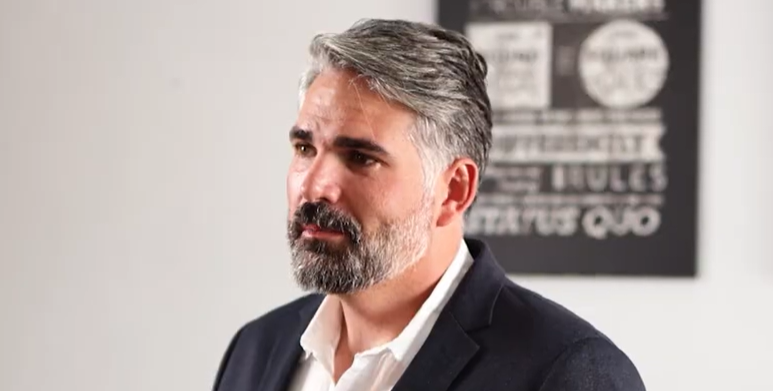
Davi Kofsky is an Associate Director at Rimon Advisory, a leading Australian R&D Tax Incentive and Export Market Development Grant consulting firm.